Lombards in Moravia
“Lombard population in Moravia. Interdisciplinary research into Migration Period necropolises.” Czech Science Foundation, Reg. No. 21-31765M
The aim of the project is to contribute to the knowledge of the population and historical events in the 6th century in the area north of the Danube based on the interdisciplinary connection of archaeology, anthropology/paleopathology, stable isotope analyses and genetics (cooperation with the international project “Histogenes”).
The period of the 6th century AD is associated with the arrival of the Elbe-Germanic population, referred to as the Lombard tribe, in Central Europe/Moravia. After a short coexistence with the Heruli, perhaps Rugi and the remains of the Quadi tribes who inhabited this area before, there was a mutual conflict and a battle, from which the Lombards emerged victorious and controlled the area north of the Danube. Later, they penetrated further south into the region of Pannonia (present-day Hungary), thus creating one of the geopolitical power centres in Europe. The social elite of that time maintained long-distance contacts or direct family ties with members of important European ruling royal families (the Frankish Empire, the Ostrogothic Kingdom, Byzantium), and long-distance trade undoubtedly flourished (almandines, semi-precious stone inlays decorating the brooches of their clothing, were imported in their raw state from what is now India). However, the first half of the 6th century is also associated with negative climatic changes that had a fundamental impact on the quality of life of the then inhabitants of Europe. The departure of the Lombards to Italy in 568, and the gradual occupation of the vacated territory by other populations – the Slavs, the Avars, is still perceived as a historical milestone between the end of the complex and confusing period of migration of peoples and a new stage of early medieval Europe.
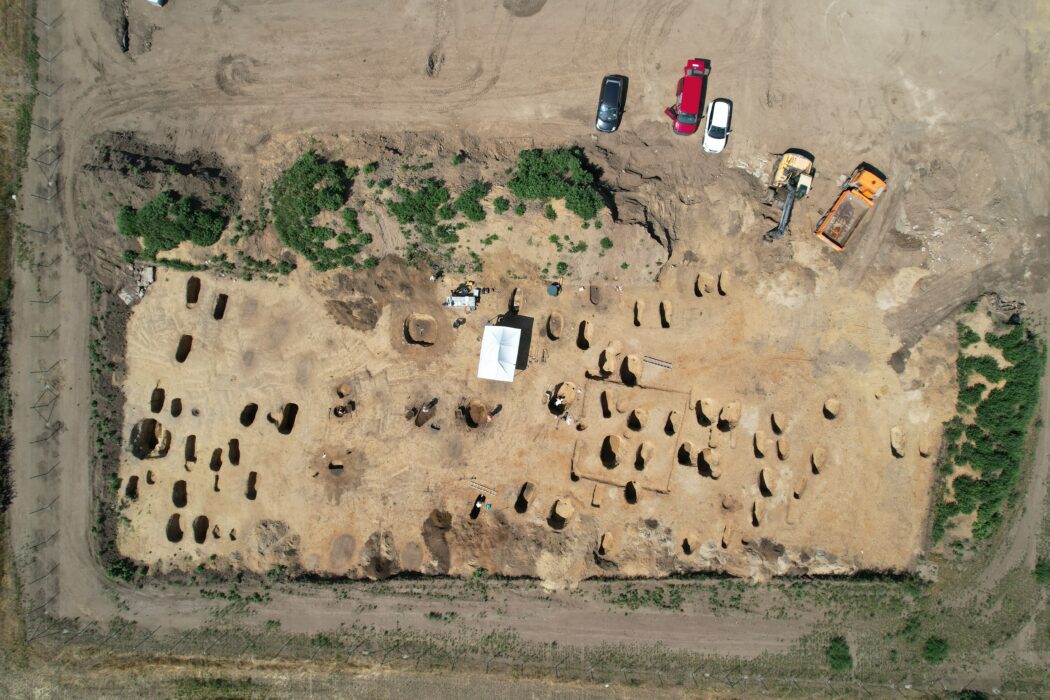
We are still practically unknown to the settlements from this period, and therefore they are the main source of knowledge about cemeteries. We are evaluating previously investigated sites, such as Holubice and Lužice, in detail, and at the same time we are actively excavating the sites from the Migration Period in Pohořelice – Nová Ves and Mušov. The artifacts we find in the graves were part of the burial clothing or were part of the burial ritual and do not necessarily reflect the reality during the lifetime of the individual. For this reason, we try to approach the research in an interdisciplinary manner and obtain data from various sources – anthropology/paleopathology brings us information about the state of health, possible injuries and diseases that left traces in the skeletal material, stable isotope analyses provide information about diet and migration, genetics about ancestry and pedigrees within individual burial grounds and contacts over longer distances.