
We are discovering new and documenting previously known cemeteries from the Migration Period in Moravia. We are combining various methods of non-destructive archaeological prospecting – we are evaluating older aerial photographs from the archive, taking new footage with the help of drones in different seasons and periods of the year, and we are subjecting selected sites to geophysical prospecting in order to locate individual objects and define the boundaries of the areas.
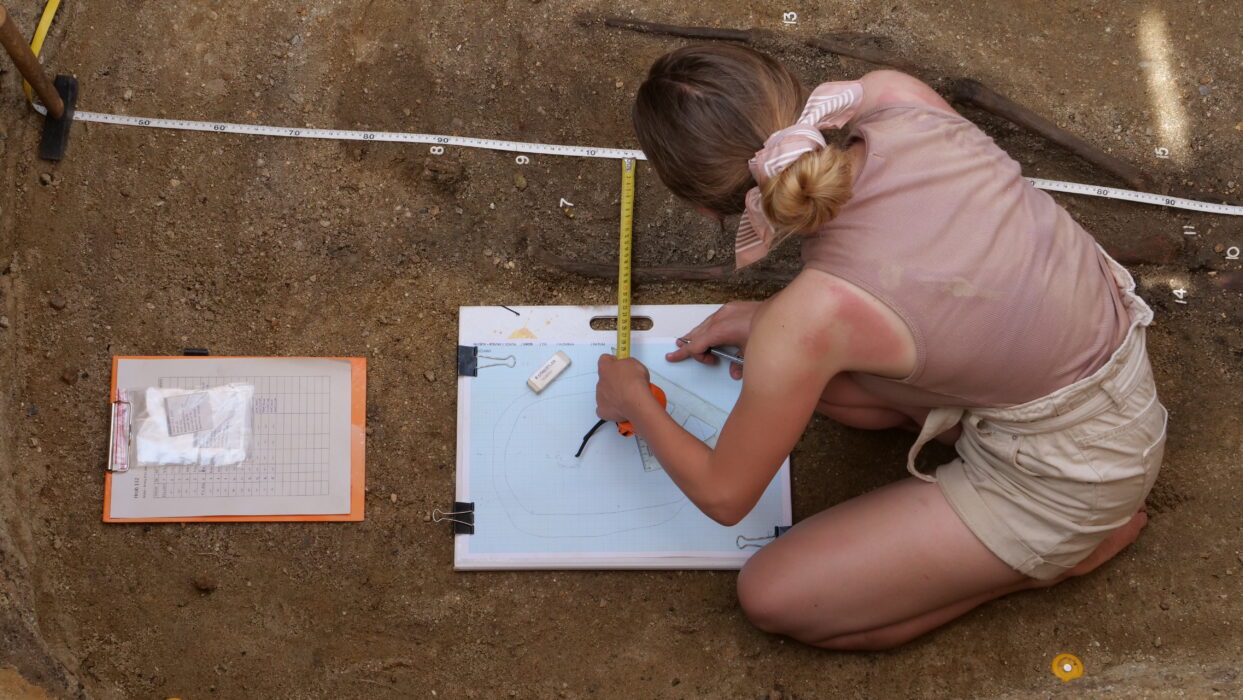
We are focusing our excavation on two large necropolises from the Migration Period. Pohořelice – Nová Ves is chronologically older, dating back to the second half of the 5th century AD, and so far we have examined 31 of approximately three hundred graves identified using non-destructive methods. From the perspective of the currently implemented project, we consider it significant that we have apparently managed to capture the horizon of the last third to the end of the 5th century, i.e. the period when the first evidence of the arrival of the Lombard tribes appears in Moravia. The second site, which we have been systematically researching since 2009, is Mušov, a central Lombard necropolis from the first half of the 6th century AD. We estimate the total number of graves at 350, of which over 250 have been documented and excavated to date. We carried out part of the research in the summer seasons of 2009 to 2013, then between 2022 and 2024 in connection with the construction of a solar power plant at the site. It can be tentatively assumed that the population spectrum was very diverse; we uncovered shallow graves with virtually no accompanying finds, graves with standard equipment, but also complex burial chambers with wooden structures and rich exclusive equipment. We consider some finds to be rare, e.g. two silver coins of the Ostrogothic kings Theodoric the Great and Athalaric minted in Ravenna.
Post-production and comprehensive evaluation of the researched sites is one of our most time-consuming tasks. We are converting documentation of previous and newly conducted excavation into digital form in a GIS, creating a comprehensive database of cemeteries and finds from individual graves. In this regard, our goal is to complete and statistically evaluate the available data.
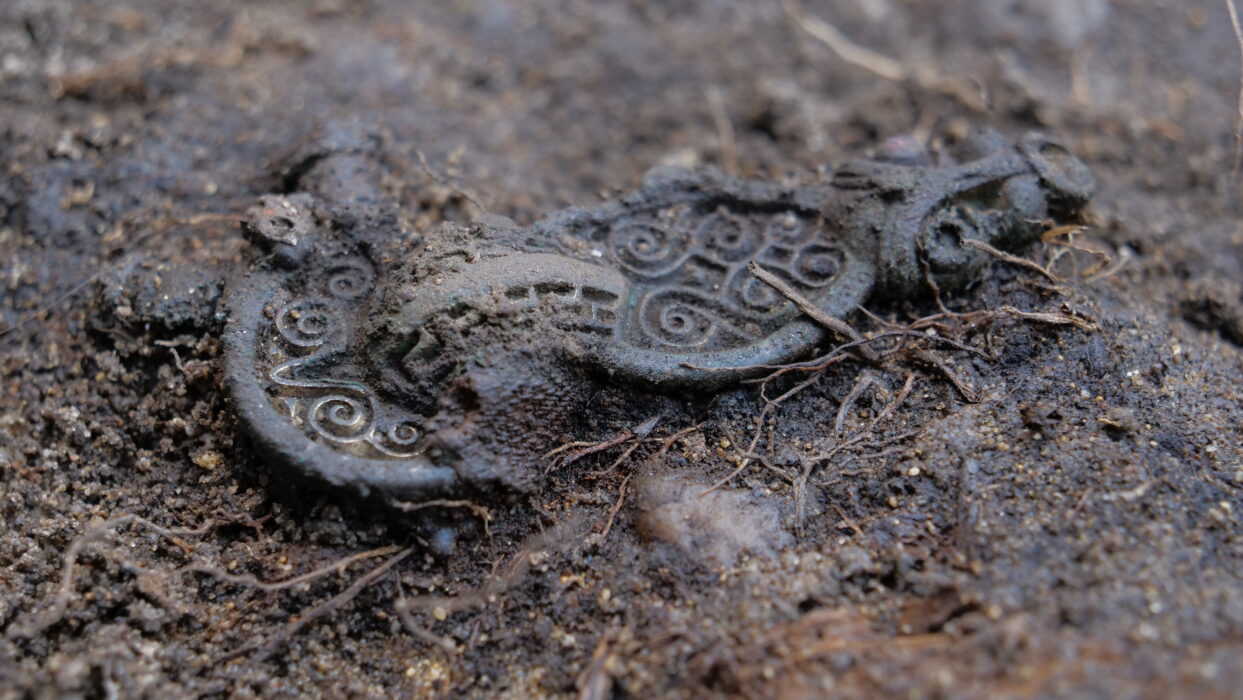
Treatment and analytical conservation of the finds is carried out in our laboratories. We collected a large part of the artefacts in the field in so-called plaster blocks, which now need to be X-rayed, gradually disassembled and adequately stabilized/conserved. Thanks to this method, we discovered a relatively large number of fragments of rare textiles that were preserved on metal objects (e.g. brooches). We are interested in the technology of production of metal artefacts or the identification and provenance of jewellery fillings.
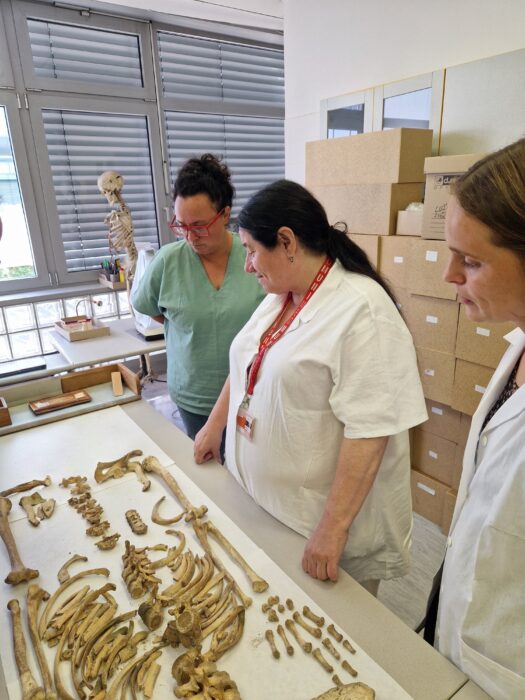
Anthropology/Paleopathology (Institute of Archaeology Czech Acad Sci and MUNI Institute of Anatomy) is already taking place in the excavation, when individual bones are professionally determined, which are often in a different position than their original position due to secondary intentional interventions (grave robbing). For archaeology, it is important to approximately determine the age at the time of death of an individual, anthropological sex and estimated height. A special discipline is the search for pathologies, i.e. changes in skeletal material that could indicate an illness or injury, and in rare cases even determine the cause of death. The findings to date include cases of arthritis, tartar and anomalies, cancer, suspected tuberculosis, injuries from fight and everyday life (fractures of limbs).
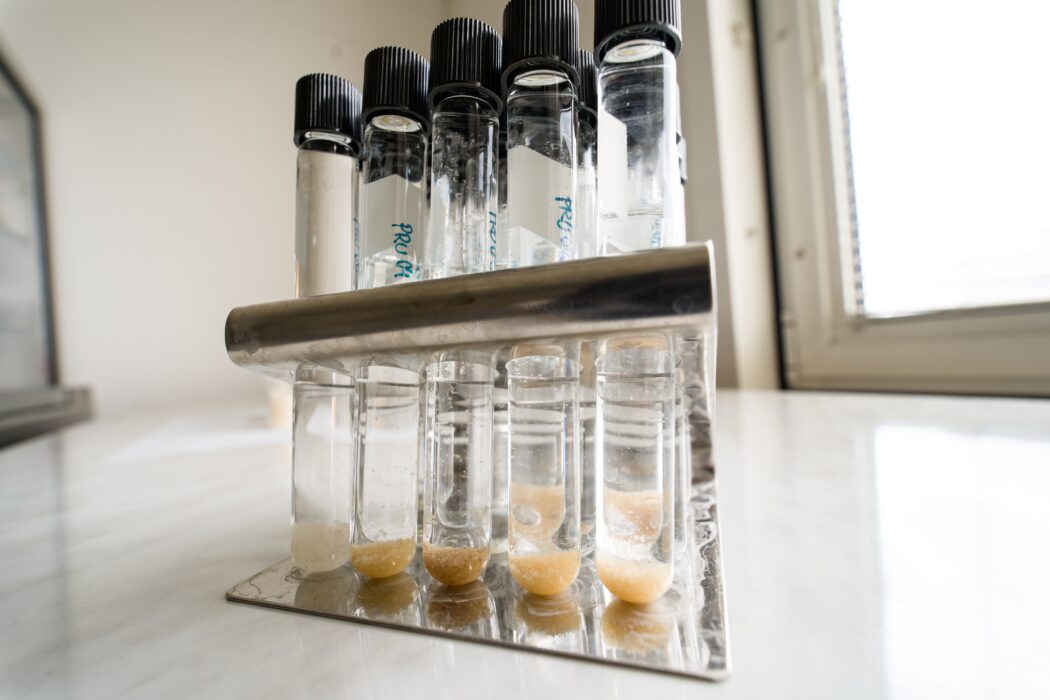
We perform stable isotope analyses (National Museum) on individuals from newly investigated sites, i.e. Pohořelec – Nová Ves and Mušov. We can compare the results with other cemeteries that were sampled at least partially – e.g. Holubice and Lužice within the “Histogenes” project or have been published in the past – e.g. Kyjov. Carbon isotopes help us distinguish between the consumption of inland plants (wheat/millet) and seafood, nitrogen isotopes determine the proportion of animal proteins in the diet (meat, milk) and the length of breastfeeding in children. Strontium isotopes indicate geographical origin and migration, because the isotopic signature of the bedrock passes into water and food and is deposited in teeth from childhood. We can determine the range of values that are characteristic of the local population and thus identify individuals who differ significantly because they lived in an area with a different geological subsoil.
Genetics is not directly included in the project, but is implemented thanks to cooperation with the “Histogenes” project https://www.histogenes.org. The sampling strategy consists of a comprehensive processing of sites, i.e. all individuals are tested, if the state of preservation of the skeletal material allows it. We preferred cemeteries that have already been published, and therefore we chose Strachotín from the second half of the 5th century and Holubice and Lužice from the following century. The results of the genetic analysis are currently being prepared for partial publication outputs.