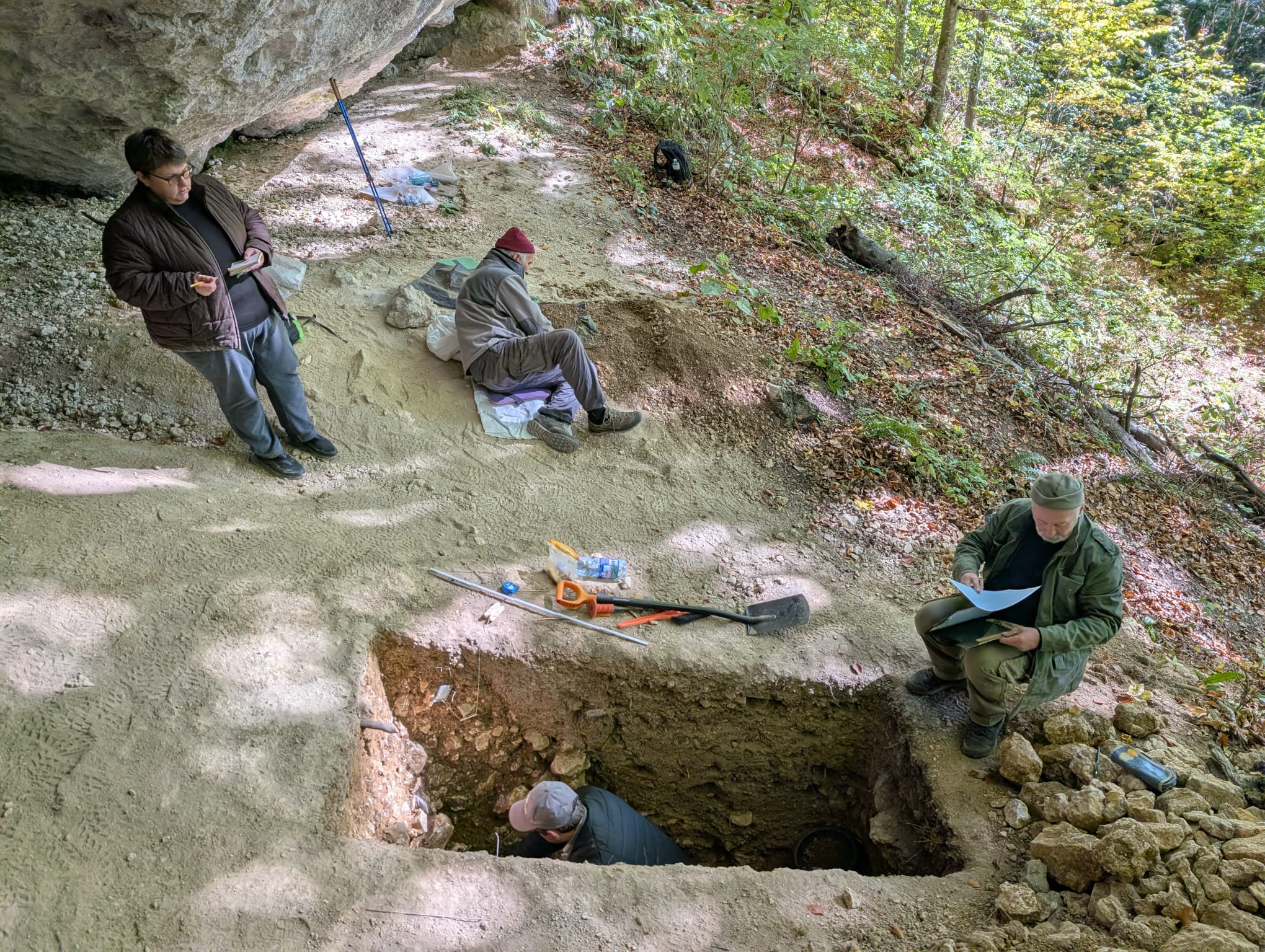
Archaeologists return after 53 years to a cave that sheds light on the history of human settlement in Europe
Press release of the Czech Academy of Sciences, Brno, 10 November 2026
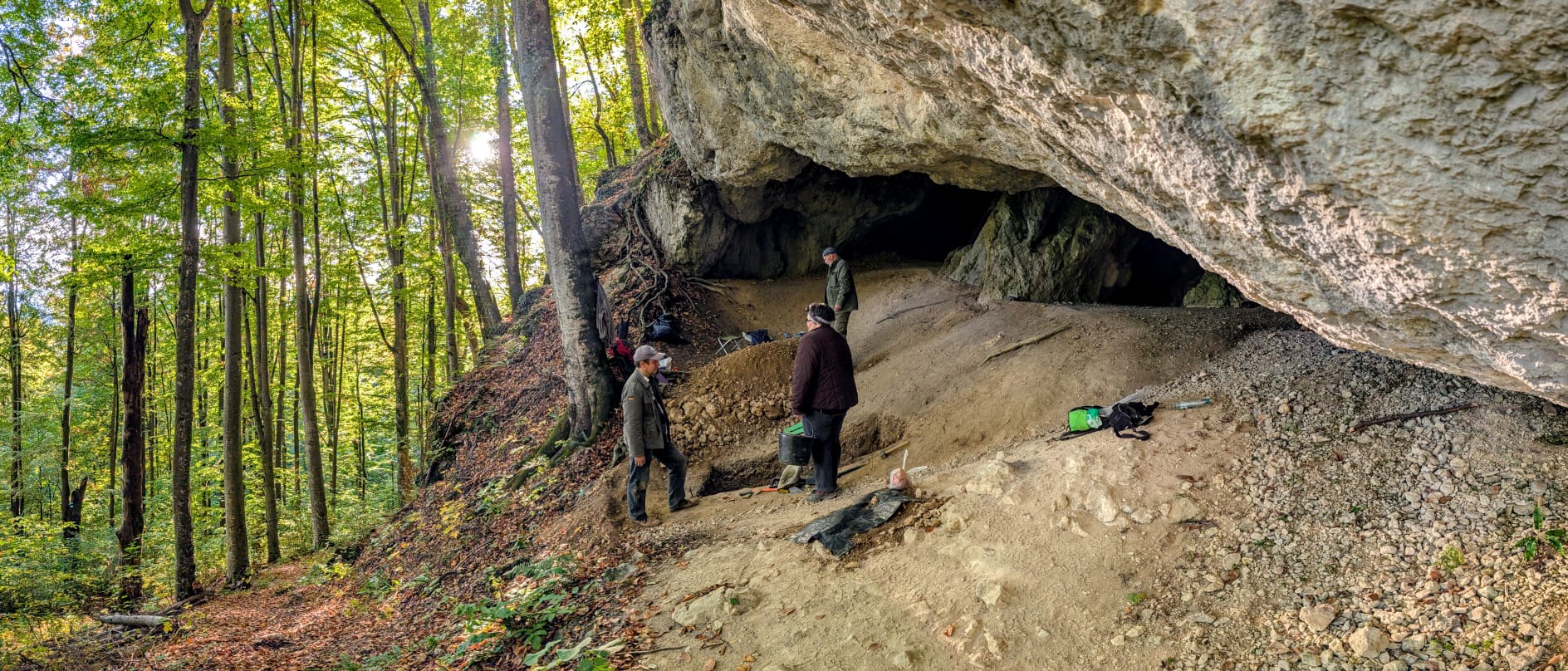
Transcarpathia is one of the key regions for understanding the earliest human settlement of Europe. Stone tools dating back approximately 1.4 million years were discovered at Korolevo, providing the earliest reliably dated evidence of human presence in Europe. Building on this research, the first Ukrainian–Czech archaeological expedition to Moločnyj Kamiň Cave returned to the site in October 2026 after 53 years. The expedition, organised by the Institute of Archaeology of the Czech Academy of Sciences, Brno, and the Institute of Archaeology of the National Academy of Sciences of Ukraine, was exploratory. The team assessed the condition of the site, collected samples and laid the groundwork for future field seasons.
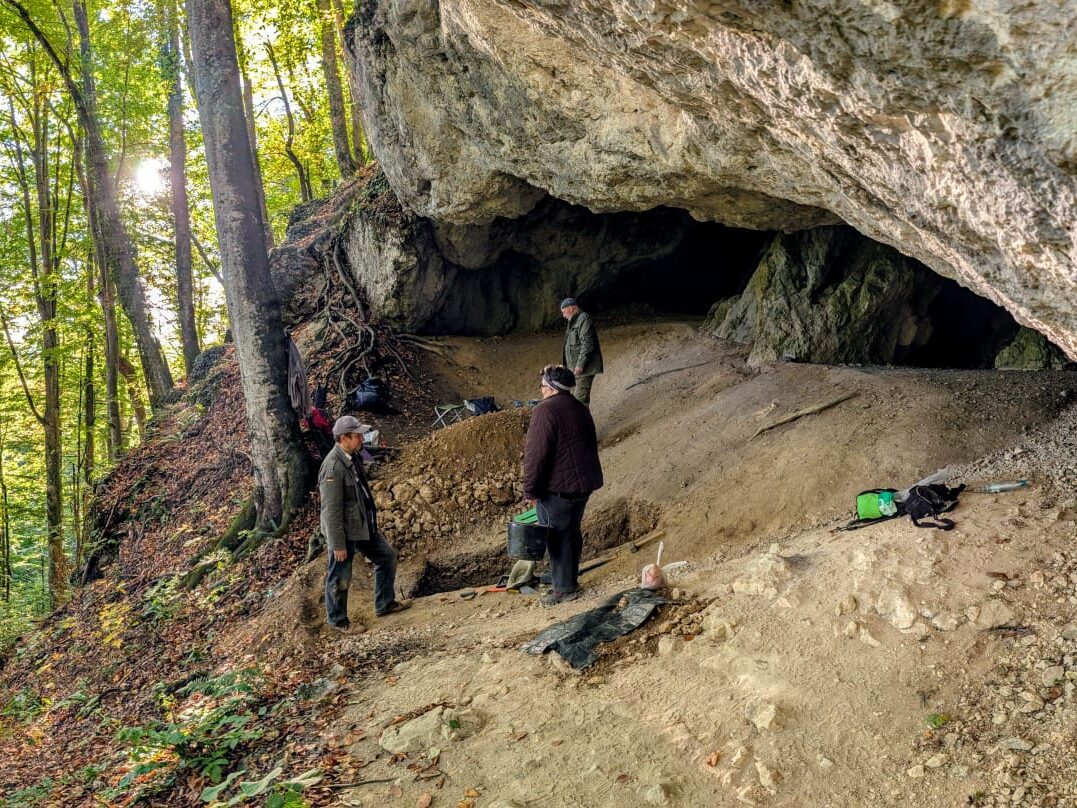
Moločnyj Kamiň Cave was first investigated in 1972 by the Transcarpathian Palaeolithic Expedition of the Institute of Archaeology of what was then the Academy of Sciences of the Ukrainian SSR. The excavations documented repeated short stays by Upper Palaeolithic hunters and uncovered a large number of animal bones, mainly cave bear remains. The new expedition built on this work and assessed how the site could be investigated further using modern scientific methods.
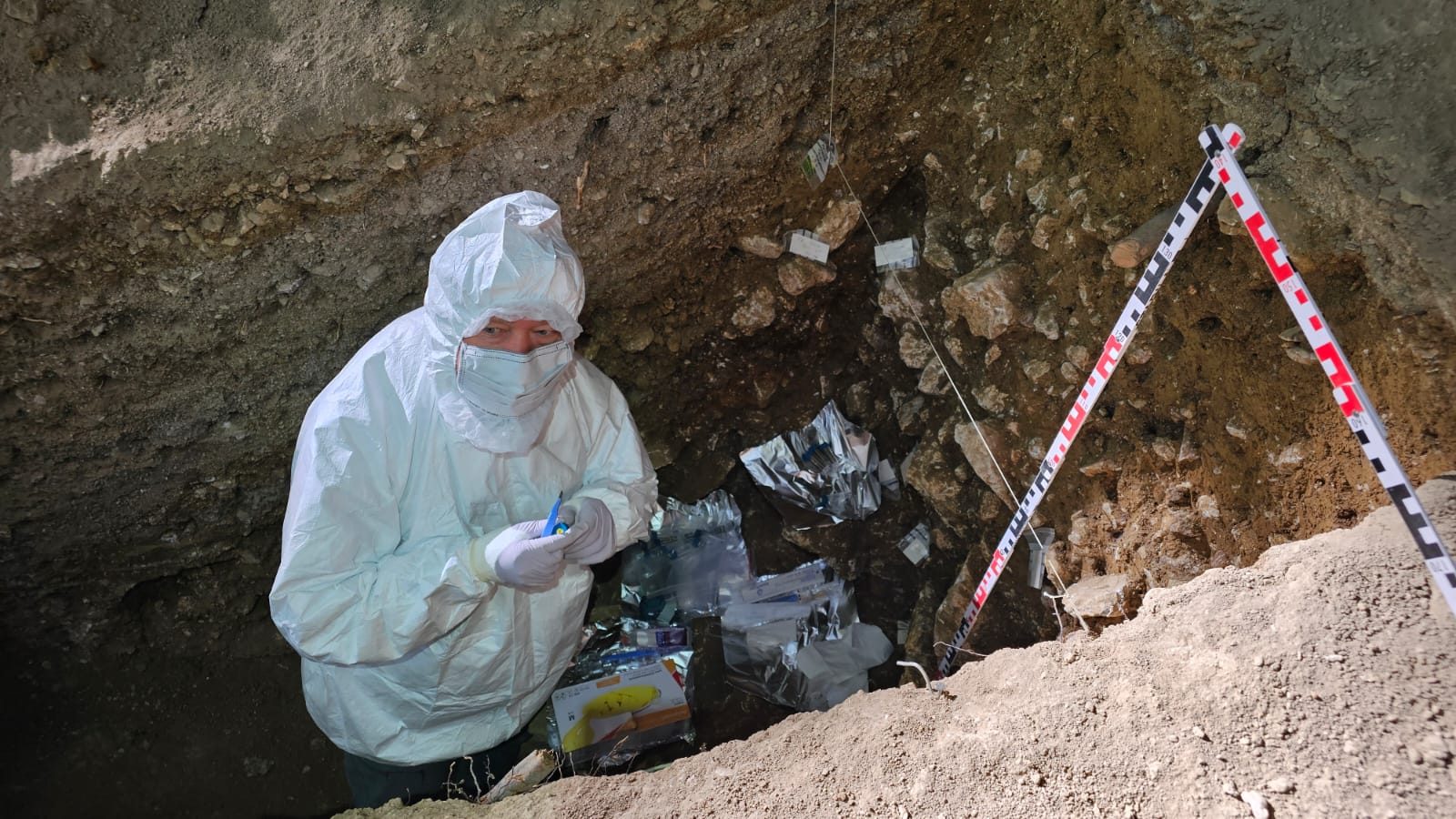
During the six-day expedition, archaeologists dug a test trench, located the original 1972 trench and re-exposed the sediment profile at the cave entrance. The individual layers may preserve evidence of the age of the finds and of the environment in which people and animals lived. Future research will therefore aim to refine the site’s stratigraphy, meaning the sequence of the layers and how they relate to one another, as well as its chronology.
“After more than half a century, we returned to a sediment profile that had already yielded traces of Upper Palaeolithic hunters. Modern dating methods and sedimentary DNA analysis can tell us much more about this cave than was possible in the 1970s,” says Roman Garba of the Institute of Archaeology of the Czech Academy of Sciences, Brno.
What can bones and sediments tell us?
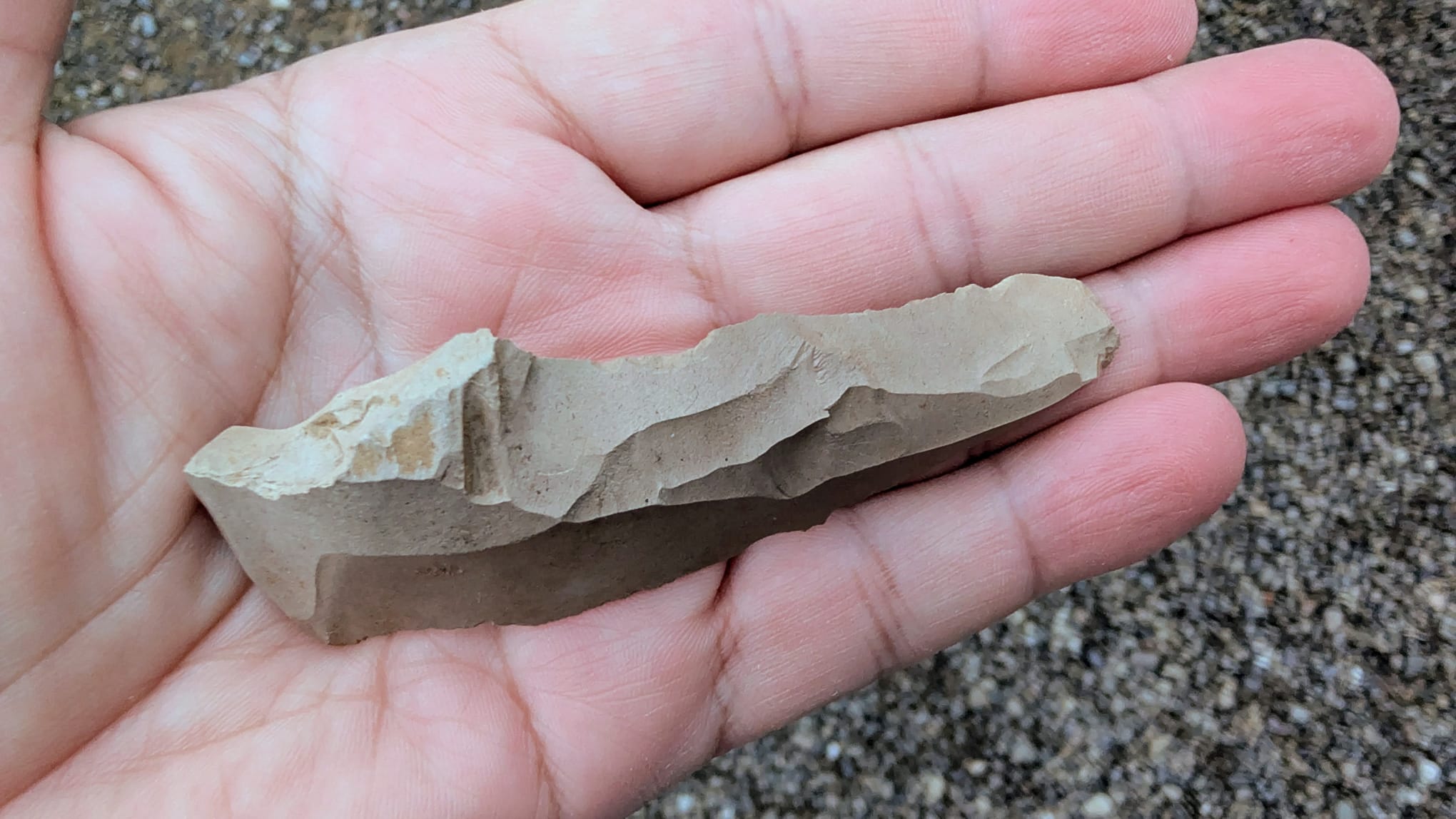
The finds so far include one stone artefact and consist mainly of bones from several bear species. The team collected seven charcoal samples for radiocarbon dating. Selected bones will be analysed using radiocarbon and uranium–thorium dating. The team also collected ten samples for a pilot study of sedimentary DNA. This analysis can detect genetic traces of animals and people who spent time in the cave, even where their skeletal remains have not survived. Two further sediment samples will be used for geochemical analysis.
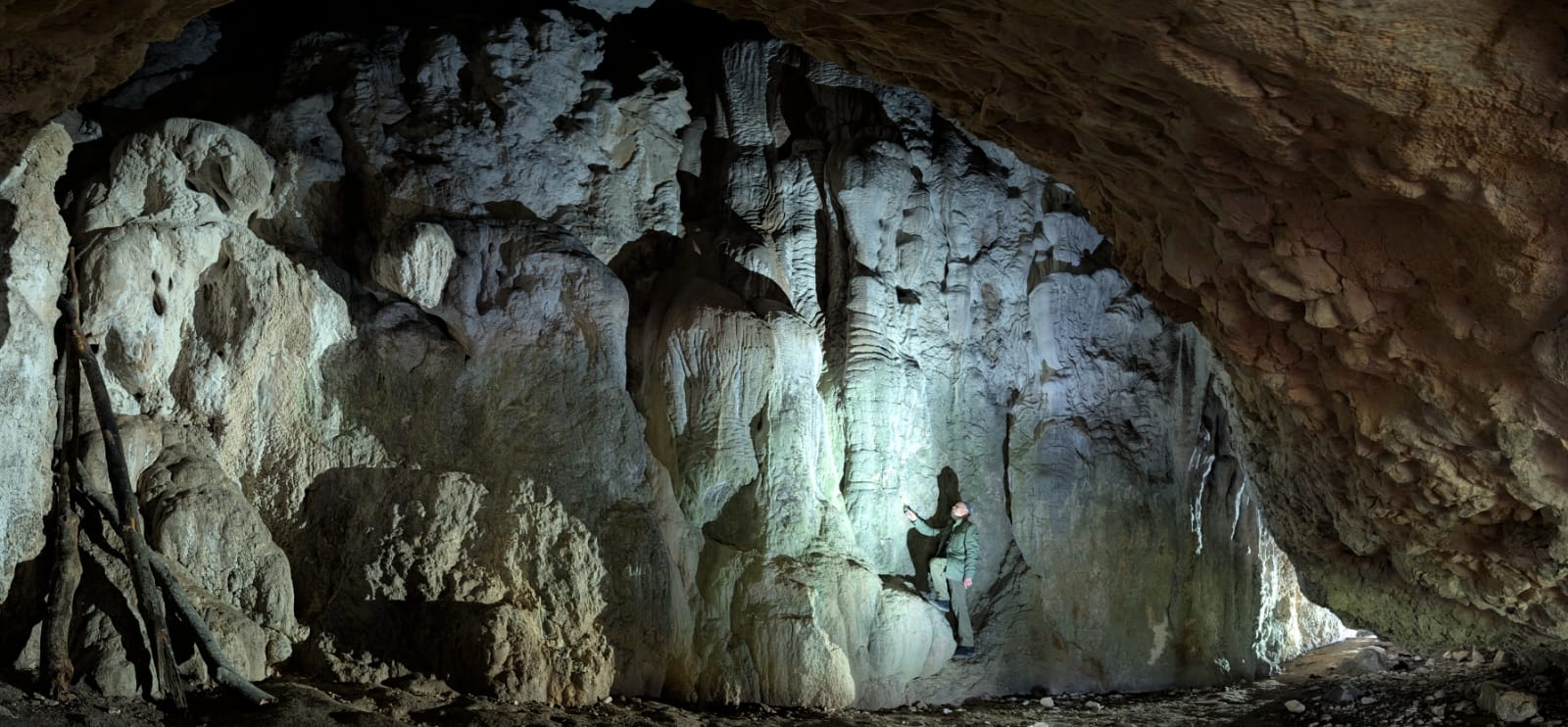
The cave lies in the Moločnyj Kamiň limestone massif at an elevation of approximately 740 metres. From the village of Mala Uholka, where the expedition members stayed, the team had to climb roughly 450 metres to reach the site. Alongside the fieldwork, the team assessed transport, accommodation and catering options for future field seasons.
“The significance of this work lies in the fact that Moločnyj Kamiň is currently the only known cave site in Transcarpathia and one of just three known sites in the Ukrainian Carpathians with evidence of prehistoric human presence. The interdisciplinary research launched by the Ukrainian–Czech team in 2026 will open a new chapter in our understanding of the region’s distant past,” says Larissa Kulakovska of the Institute of Archaeology of the National Academy of Sciences of Ukraine in Kyiv.
Building on the discovery of Europe’s earliest human settlement
In 2024, a team led by Roman Garba of the Czech Academy of Sciences published a study in Nature that used cosmogenic nuclide dating (beryllium-10 and aluminium-26) to establish that the oldest stone tools from Korolevo in Transcarpathia are approximately 1.4 million years old. They provide the earliest reliably dated evidence of human presence in Europe and support the hypothesis that the first humans entered Europe from the east.
“Transcarpathia is a key region for understanding the Palaeolithic settlement of Europe. This collaboration allows us to pursue the research systematically and combine our Ukrainian colleagues’ many years of experience with modern laboratory methods,” adds Vitalii Usyk of the Institute of Archaeology of the Czech Academy of Sciences, Brno.
The expedition took place under a memorandum of understanding signed by the Institute of Archaeology of the Czech Academy of Sciences, Brno, and the Institute of Archaeology of the National Academy of Sciences of Ukraine in Kyiv. The six-member team included three archaeologists from the Kyiv institute: expedition leader Larissa Kulakovska, Oksana Votiakova and Andrij Veselsky. They were joined by Bogdan Ridush, a palaeontologist and speleologist from Yuriy Fedkovych Chernivtsi National University, and two representatives of the Czech side. Vitalii Usyk is a Ukrainian archaeologist from the Institute of Archaeology of the National Academy of Sciences of Ukraine and currently works at the Institute of Archaeology of the Czech Academy of Sciences, Brno. Expedition co-leader Roman Garba is affiliated with the Institutes of Archaeology of the Czech Academy of Sciences in Brno and Prague and with its Nuclear Physics Institute.
The expedition is part of a broader research project led by Petr Škrdla of the Institute of Archaeology of the Czech Academy of Sciences, Brno, and supported by the Czech Academy of Sciences’ Academic Award (Akademická prémie).
Research article
Garba, R., Usyk, V., Ylä-Mella, L. et al. (2024). East-to-west human dispersal into Europe 1.4 million years ago. Nature, 627.