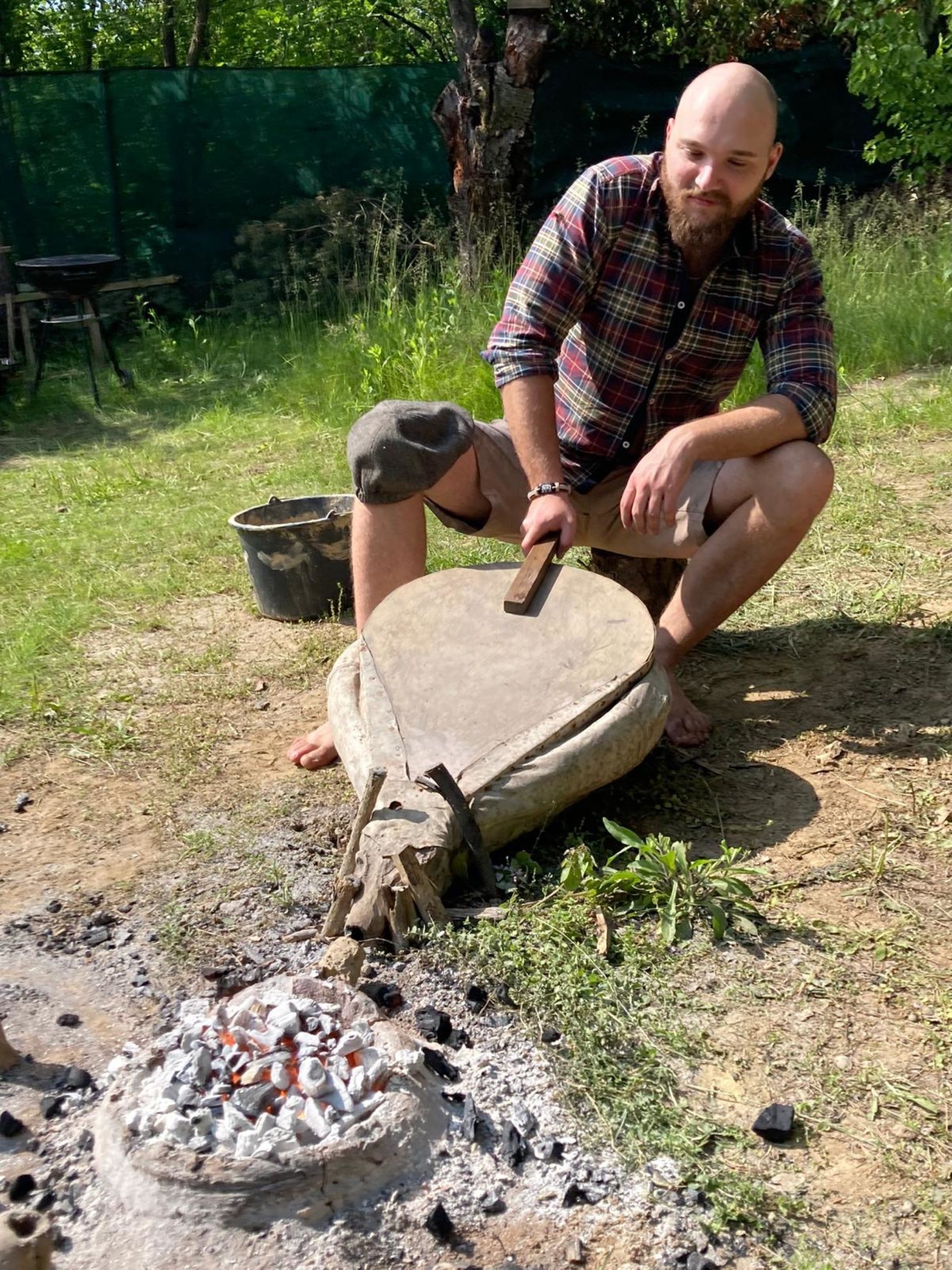
Our colleagues Matěj Kmošek, Filip Ševčík, and Čeněk Fouček have published a new article in the peer-reviewed EXARC Journal dedicated to the experimental smelting of copper ores from Moravia.
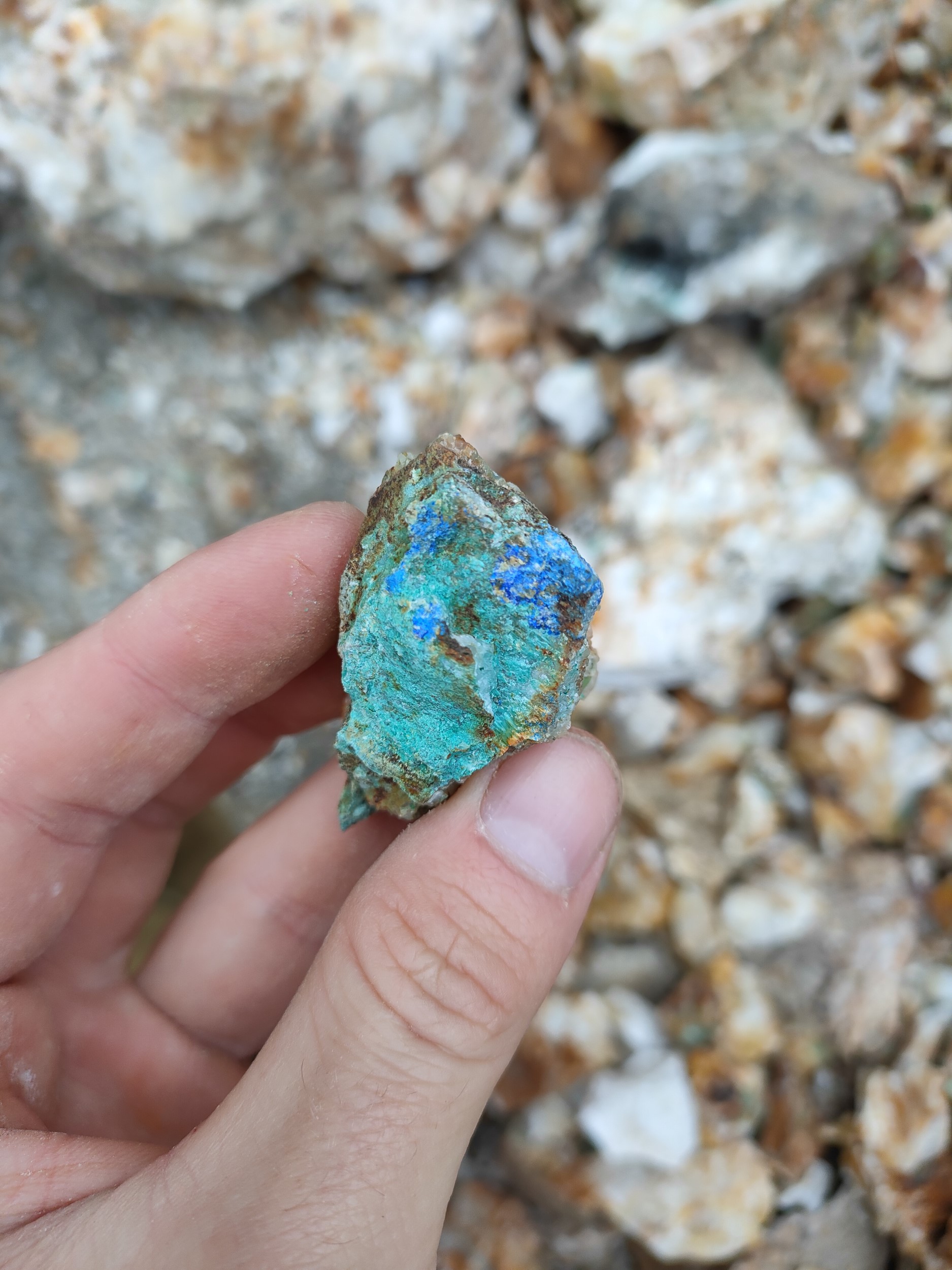
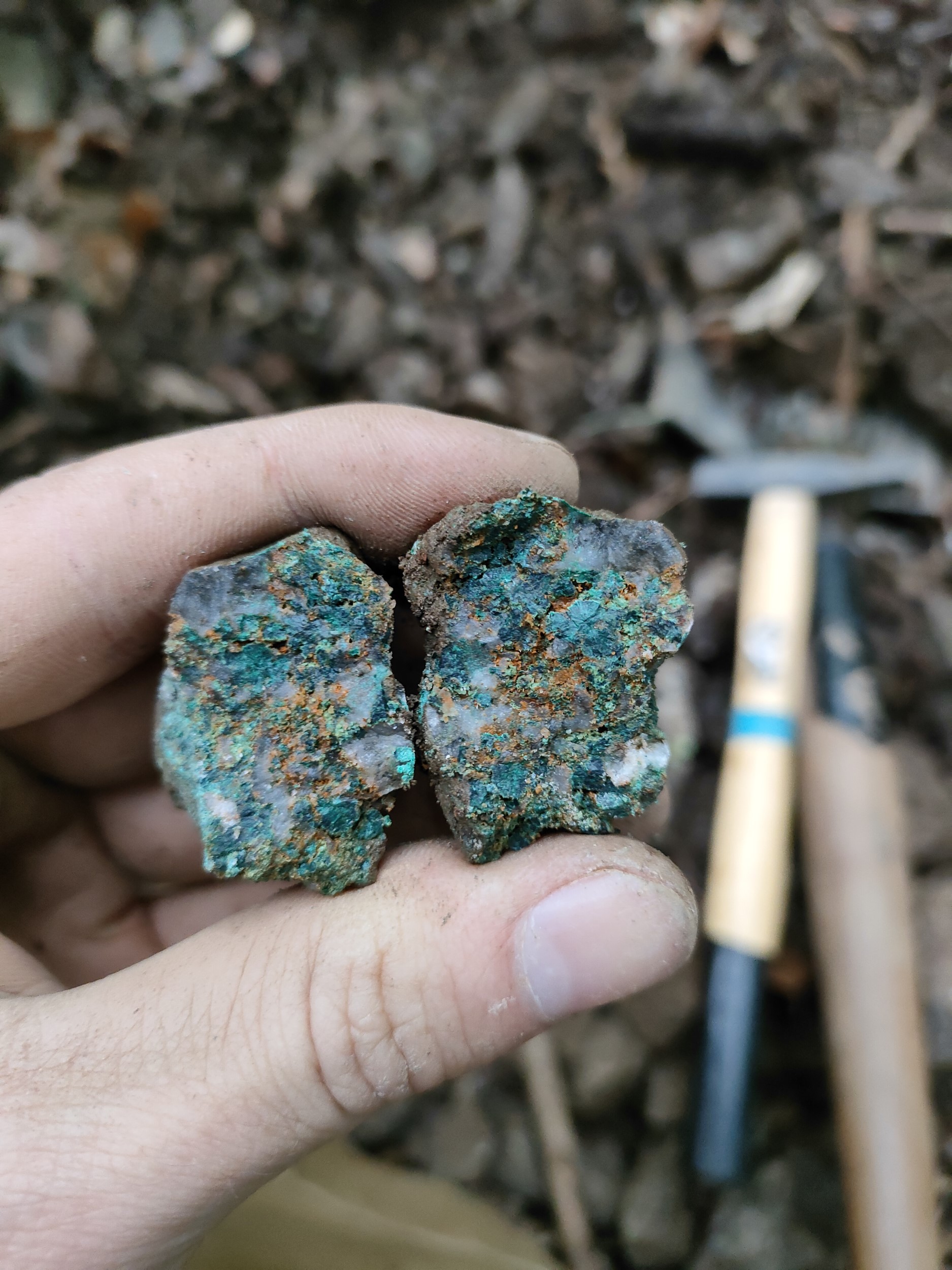
The study, titled “Experimental Smelting of Local Copper Ores from Moravia”, examines ores from two Moravian sites: Štěpánov nad Svratkou and Lipová-lázně. The main research question was whether these raw materials could be smelted using technological methods consistent with the capabilities of prehistoric communities – and thus whether they could, at least hypothetically, have served as local sources of copper. High-purity malachite from the Shilu mine in China was used as a reference material.
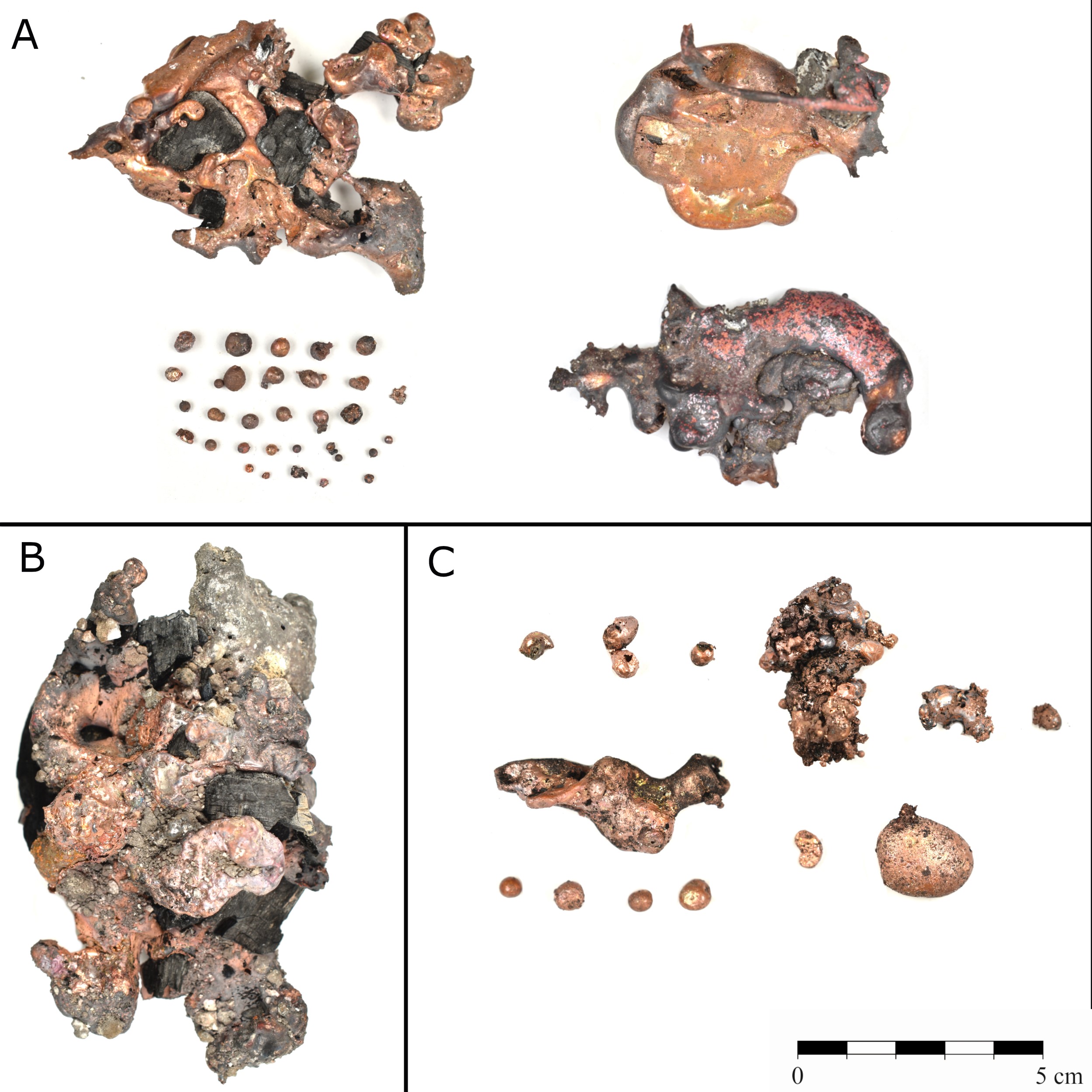
During the experiments, the authors tested various methods of preparing and charging the furnace – including the use of a graphite crucibles, clay balls and direct furnace charging. They also compared different air supply methods, using lever-operated bellows versus wooden blowpipes made from elderberry wood.
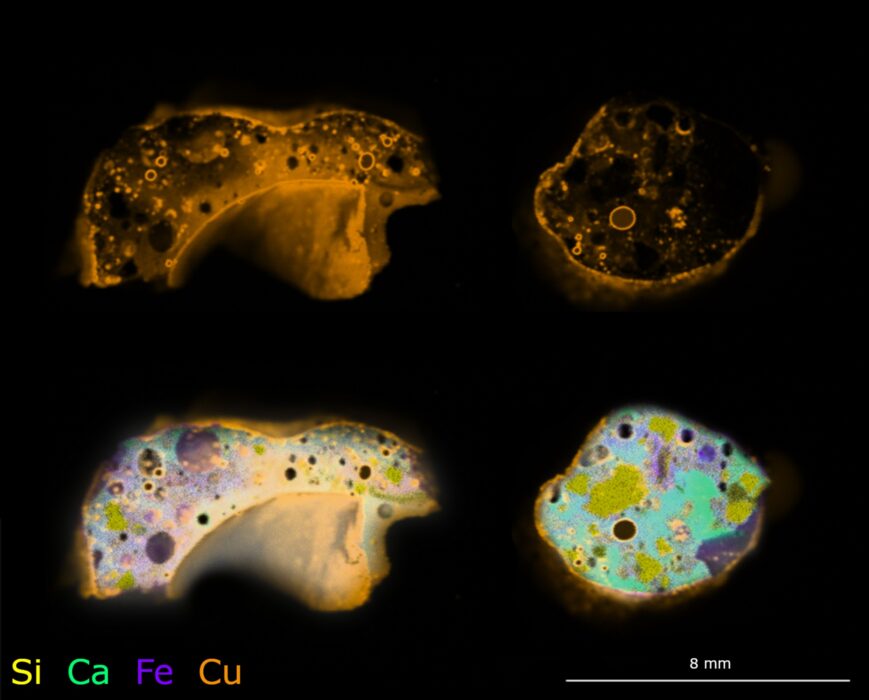
The results confirmed that both Moravian ores could be successfully reduced to metallic copper with a purity exceeding 99%, despite containing less copper and a higher proportion of gangue than the reference ore. However, the yields varied significantly depending on the specific raw materials and technological methods employed.
The analyses also revealed that certain trace elements present in the ores were selectively transferred into the resulting metal. Copper obtained from the ore from Štěpánov nad Svratkou was characterised primarily by silver, whereas ore from Lipová-lázně showed a combination of manganese, cobalt, and nickel. These findings may also contribute to research into the provenance of archaeological copper artefacts.
The article is freely available in English on the EXARC Journal website: